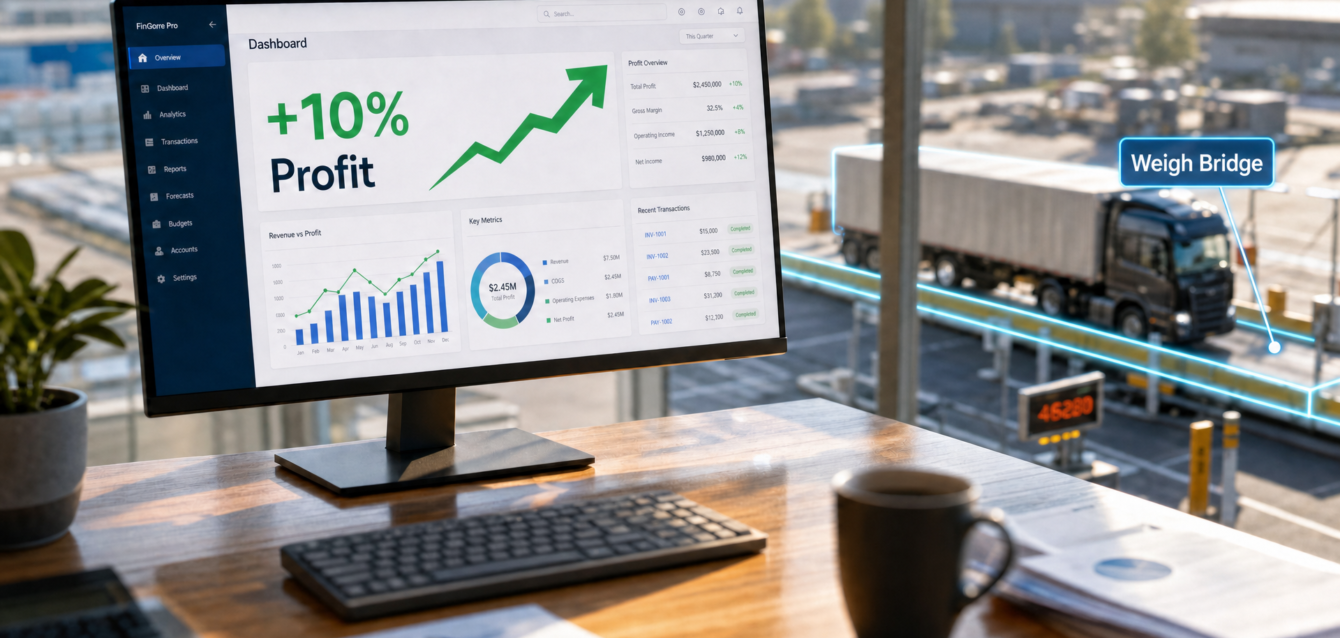
A weighbridge is a heavy-duty industrial scale designed to weigh cargo vehicles and measure their loads. Every truck driving onto a weighbridge carries more than physical materials, it carries critical operational data that directly affects inventory accuracy, billing, supplier payments, customer invoices, compliance records and business profitability. Despite the vital role of this checkpoint, many organizations continue to operate weighbridges using paper tickets, manual data entry and disconnected systems.
While these methods may appear adequate for daily operations, they introduce hidden risks that become increasingly expensive as vehicle volumes grow. A single incorrect weight entry, an altered paper ticket, or a manually overridden transaction can trigger inventory discrepancies, delayed dispatches, payment disputes, and compliance challenges. When every vehicle movement depends on human intervention, maintaining operational accuracy becomes increasingly difficult.
Manual Weighbridge Processes Create More Than Human Error
The biggest challenge with traditional weighbridge operations is the lack of a reliable, traceable workflow. Finance teams depend on accurate weight records for invoicing and reconciliation, yet manual entries can lead to incorrect billing or revenue loss. Operations managers face growing queues because drivers wait for paperwork, manual verification, and ticket generation before continuing their journey. Meanwhile, compliance managers struggle to investigate disputes when records are incomplete or difficult to verify.
As vehicle volumes increase, these problems multiply. Manual data entry slows throughput, paper records become difficult to manage, and every additional step creates another opportunity for mistakes or manipulation. Without a centralized digital record, organizations spend valuable time investigating discrepancies instead of improving operational efficiency.
Why Traditional Weighbridge Management No Longer Meets Modern Operational Demands
A weighbridge is no longer simply a weighing platform. It has become a critical control point within the supply chain.
Modern logistics operations require every vehicle transaction to be accurate, traceable, and instantly accessible. However, traditional weighbridge environments often operate as isolated processes disconnected from broader business systems.
Vehicle details may be recorded manually. Weight values may require operator input. Paper tickets can be misplaced or altered. Identifying vehicles through visual checks alone increases dependency on operators while reducing consistency. As a result, businesses lose valuable operational visibility and create unnecessary opportunities for fraud, human error, and delayed decision-making.
Automating Every Vehicle Transaction with Intelligent Weighbridge Management
A modern weighbridge automation solution removes these operational bottlenecks by digitizing the complete weighing process. Instead of relying on manual vehicle identification and handwritten tickets, the platform integrates RFID windshield tags, ANPR (Automatic Number Plate Recognition), weighbridge sensors, automated barrier control, CCTV logging, and intelligent software into one connected workflow.
As each vehicle arrives, RFID or ANPR automatically identifies the vehicle before the weighing process begins. Weight data is captured directly from the weighbridge sensors without manual input, eliminating transcription errors while ensuring every gross, tare, and net weight is recorded accurately in real time. Digital tickets are generated automatically, creating a complete audit trail for every transaction.
Because every stage operates within a centralized platform, businesses gain complete visibility into vehicle movements, weight records, transaction history, and operational performance. The solution can also integrate with ERP and logistics platforms, allowing weight information to flow directly into existing business processes without duplicate data entry. This improves operational efficiency while reducing fraud, paperwork, and manual administration.
Manual vs Automated Weighbridge Operations
| Operational Area | Manual Weighbridge | Automated Weighbridge |
| Vehicle Identification | Manual verification | RFID and ANPR identification |
| Weight Recording | Manual operator entry | Automatic sensor-based capture |
| Ticket Management | Paper tickets | Instant digital ticket generation |
| Audit Trail | Difficult to verify | Complete digital transaction history |
| Fraud Prevention | High dependency on operators | Automated validation with traceable records |
| System Integration | Standalone process | ERP and logistics platform integration |
Frequently Asked Questions
What is weighbridge automation?
Weighbridge automation is a digital system that automates vehicle identification, weight capture, ticket generation, and transaction recording using technologies such as RFID, ANPR, sensors, and integrated software.
How does ANPR improve weighbridge operations?
ANPR automatically identifies vehicle number plates, eliminating manual vehicle verification while improving accuracy and creating a traceable record for every transaction.
Can the system integrate with ERP software?
Yes. The solution supports integration with ERP and logistics platforms, enabling real-time data flow across business operations.
Which industries benefit from weighbridge automation?
The solution is designed for logistics hubs, manufacturing facilities, construction sites, bulk material handling operations, and industrial yards where accurate vehicle weighing and transaction traceability are essential.